Pages

Showing posts with label RAMjew. Show all posts

Monday, October 11, 2010

Singularity - Nostalgia at its worst and best


The mighty FPS (First-person shooter) has been the staple of the ever hungry nerd since the spawning of his existence from the primordial soup eons ago. We all know the FPS genre has gone through a few changes with the evolution of physics in Half-Life, the blood and gore of Quake and Doom, and even the progression of storyline in the likes of Bioshock, Fall Out 3 (more so an FPS-RPG hybrid) and even Call of Duty: Modern Warfare 2 with its cinematic beauty and Hollywood styled fast-paced action. Bioshock was a noteworthy achievement in the history of the FPS, not so much as Half-Life which deserves even more credit, but nonetheless it furthered story elements, plot and issues of morality beyond any of its predecessors. Following Half-Life and Bioshock FPS games have continued along this trend adding moral weight and relying heavily on story to support a game through and through. Recently, with the release of the game Singularity developed by Raven Software, who previously worked with id Software on Quake 4, the nostalgia of the genre as a whole is realised.

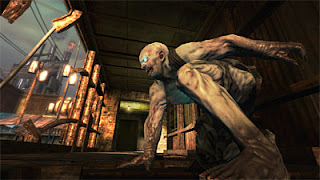
When you first begin the game you soon come to realise the striking similarities between Singularity and Bioshock. It’s almost as if minimal game development took place, and Raven Software were off drinking coffee, playing some Modern Warfare 2, ate some day old ramen noodles then realised they were game developers. In essence they’ve produced a lacklustre ‘Borat’ of a game, which as this review will explain, lacks a cohesive story and relies too heavily on repetitive gameplay. In Singularity you play as Renko, a member of an American reconnaissance team, who is investigating the island called Kartorga-12. On the island a catastrophe occurred involving the Element 99 leading to the formation of a ‘singularity’ causing a nuclear fall out, which mutated much of the island’s inhabitants. As the player progresses in the game it becomes apparent that the Soviet Union was pulling a fast one, covering up the horrific experiments they conducted on the island. The result is a variety of Element 99-powered monsters with abilities ranging from teleportation to super human strength. But, don’t worry of course you have some firepower on your side and the TMD (Time Manipulation Device) which gives you mastery of time in all of its glory. With the TMD you can age enemies to dust, move objects backwards and forwards in time and shoot opponents with bursts of time-force killing them in the process. This becomes handy when faced with puzzles and the barrage of enemies you encounter as you travel through the game.


Puzzles are much the same throughout the game, with the simplicity of having to age an object to reveal a new path to moving objects and using them to overcome obstacles. There are a few moments where admittedly the monotony is broken, such as one level where you have to rebuild a whole ship and steal a nuclear war-head, but these are far and few between. The experience ends up in a vice grip with moments of utter bemusement (there are some really WTF moments) to seriously dreary segments where a game of ‘Rock Paper Scissors’ is more invigorating. It’s not that the game is terrible it just lacks a certain spark that other FPS games pull off so well. The reality is most games in the genre end up recycling ideas, this is inevitable, but they do so with some style and add a new dimension of experience. The development team of Singularity tried to take the best bits of the genre and re-package it to eager nerds, expecting us to lap it up like some deranged WOW addict. Singularity is a good attempt but misses the mark entirely. One of the redeeming qualities of the game, ironically, can be found in its weaponry. In terms of weapons Singularity has a lot more going, however that is only in certain instances. The Seeker is one such weapon (a sniper rifle of sorts) with the exception that when shot the player can control the path of the bullet weaving through enemies hitting vital spots dead-on. This is extremely useful (and bad-ass) when in the middle of a gun fight, and enemies are scattered all around the map. Other weapons are pretty standard with a revolver, assault rifle, Spikeshot (a special railgun which can charge its energy and when released ploughs through enemies), Autocannon (a frickin’ huge mother of a machine gun), a grenade launcher, a normal sniper rifle and finally a rocket launcher.

There is no true effort to innovate, with the exclusion of the Seeker and Spikeshot and this extends to the story and the characters that reek of cheese. Renko has no moral urgency and is cardboard-cutout who has no core to his character, yet all we know is he’s American, apparently got some skill and kicks ass like nobody’s business. The only time morality came into the fray was right at the end of the game, and by then you tire of the experience altogether. There’s no true substance to Singularity and by the same accord it doesn’t foster any emotional ties with Renko or the other various characters. Bioshock, and even Half-Life made you feel for the characters, enter their worlds, their experiences. Singularity hardly tries to bring the player into the world of Kartoga-12 let alone uncover Renko’s motivations and feelings of his whole ordeal.

Graphically, Singularity is a beauty to behold utilising the Unreal 3 engine in all its full glory. Everything flows naturally in-game like a well oiled AK-47 in motion firing rapid-fire in a fit of lunacy. Models are highly detailed and the monsters are somewhat non-threatening, offering little of what other horror games achieve on a visual level. Singularity visually brought the world of Kartoga-12 (in all its deformed beauty to life). Yet, at times it felt as if Singularity was more dependent on the graphical side of things, rather than developing a more intriguing plot and storyline.

Now you’re probably wondering how can Singularity be compared to Bioshock, is this dude on crack or something, or has this guy got a few screws running loose. God knows, but Singularity in its design and the way it pans out attempts to be what Bioshock was, with a design approach that is eerily close to said game. Everything down to the voice recordings and 50s styling is all so similar, except for the game being set on dry land and your fight in this instance is against a deranged Soviet dictator. Gameplay involving the TMD is just a substitute for the plasmids from Bioshock which offered more in terms of the powers you could use. In Singularity the variety of time powers is limited, and at times feels like it could have been more fully utilised for its potential. Singularity is also lacking in the story department and ends up being s half-hearted attempt of trying to horrify the player, and doesn’t effectively create tension. On the other hand a game like Metro 2033 achieves tension effortlessly and (albeit more successfully) than Singularity, with the extended periods of silence and sudden scares that come at you out of nowhere. At the end of it all Singularity is so-so and doesn’t do anything new within the genre. Its reminiscent of old-school shoot-em’ up violence, and if that’s what you’re looking for go ahead and buy it. However, the game suffers from flat characters and a cheesy story which leaves Singularity sorely predictable. Time could be more well spent playing a game like Borderlands (with its extensive DLC) if you’re tiring of the whole ‘time travel’ thing.

Singularity is average at best and offers nothing new ending up as a big disappointment with loads of lost potential.

Wednesday, October 6, 2010

Games as Art - Roger Ebert is the biggest douche ever


 The recent debate of the integrity of video games as an art form has sparked outbursts of rage across all spheres of nerd-dom resulting in mass flame wars, the likes the internet has never seen. It has long been the art critic’s ass-backward ways to demarcate video games as a hobby, a pastime, an irrelevant audio visual spectacle amounting to nothing more than a form of entertainment equivalent to interactive debauchery.

The legendary film critic Roger Ebert never went as far as my descriptive wording, oh he did something far worse and made the internet very angry (Hulk angry). From the depths of the web emerged resentment of the largest order. Ebert in a recent blog entry claimed that videogames hold no artistic value and should be assessed in terms of a codified scoring system. Essentially, basing a game’s value from certain criteria it fulfils. His claim about videogames stems from the fact that games involve objectives, scores and ultimately achieving an outcome. Ebert feels that art doesn’t require choices and leaves interpretation up to the viewer of the artwork. This argument is two-fold whilst I agree that art is able to influence and have an impact on the individual, with the advent of modern gaming games have surpassed the banal description Ebert provides.  The reality is that modern videogames lack clear cut choices, and blur the lines between art and the videogames of old. Ebert’s critical perspective of videogames and whether they warrant the label of ‘art’ is questionable, when he refuses to experience the evolution of videogames firsthand. He is for all intents and purposes viewing videogames as being of similar artistic merit to Pong, Pac Man or Space Invaders. Even, though it can be disputed whether to consider early videogames artworks. I feel they do deserve a second glance as critics have claimed that the simplest and at times most random of designs such as Bushmen paintings and the art of Jackson Pollock (one of the pioneers of the Abstract Expressionist movement) to be the epitome of art. So, why not Pong or Pac-Man? A videogame is simply not about how exceptionally realistic the graphics are or how new and intuitive the gameplay may be. It is the experience of a videogame which reveals its artistic value.

Videogames for me and many others is art in motion, an experience that builds up momentum as the player immerses themselves in the world of the game releasing them from the trappings of the physical (World of Warcraft players are a prime example). This can occur even when the sole experience of game is gameplay. It is the interactive experience of videogames that leads the player down their own individual garden path and to a deeper connection between both the player and the videogame. No two people will experience a videogame the same way and essentially narrative may be more complex than other works of fiction. By Ebert’s standards some of the great novels he considers art, like Charles Dickens’s works are structured and follow a set narrative comparable to videogames. The same can be said of movies which offer a linear plane of experience more limited than that of a videogame. Yet, interpretation is key to defining what is and isn’t art. Games nowadays cater for a full-on experience crossing the barriers established by different media. A game like Bioshock is about the experience of engrossing the player in an underwater hellhole stuck in the 1950s, and fighting your way through the dangers that lie ahead. The game plays like a novel with the added bonus of self-tailoring your own unique journey in Bioshock’s dystopian setting. It is peppered with dark and somewhat amusing characters and gameplay, while adding an interactive dimension and moral implications to your actions (in harvesting or rescuing the Little Sisters). These have consequence later on in the storyline.

Films and novels fail in the regard of interaction between the medium and player, lacking the level of interaction that videogames encompass. Many games also operate on the artistic level that traditional fine art dominates, but games too welcome creative innovation that fine art so desperately seeks. An example of a game which bares an artistic dimension is the game Okami which incorporates the beauty of Japanese water block painting and merges it with the gameplay mechanic of a paintbrush. This allows the player to execute maneuvers based on paintbrush strokes, and forms a distinctive approach to battling the demonic forces that plague the landscape of Okami. Another game which embraces artistic innovation and imaginative thinking is Scribblenauts, a game for the Nintendo DS. It offers limitless possibilities of overcoming platforming obstacles with your character, by merely writing a word on the touch screen of the DS. The large variety of word play available to the player allows for imaginative approaches to problem solving, and doesn’t lock the player into a predefined way of completing tasks. The point of art is to not confine a person to one interpretation of the artwork, and by the same token videogames achieve this.

In the end this is where the current state of games as an art form lie, in the development of interactivity through creative outlets.  Meaning the player could have a more flexible understanding of the game world, whilst simultaneously permitting the player free reign in their interpretation of the game. Even, games which still forego artistic value for the sake of entertainment can be viewed as artistic. Games are fun and aren’t necessarily thought provoking works of art, in the traditional sense. However no one said art couldn’t be fun, and videogames are evolving further and further beyond preconceptions. All you need to remember is art is art, it all depends on your perspective. Also, Roger Ebert is the biggest 'douche' ever. 

Inception - An idea can start it all


In the new film Inception by acclaimed director Christopher Nolan (Memento, Batman Begins, Batman The Dark Knight) moviegoers come face-to-face with the depths of the human subconscious, where a heist like no other happens. What are the stakes you may ask? It’s the simple endeavour of extracting ideas from individual targets whilst they slumber in a dream state. During the course of the film the subconscious becomes the playground of a band of thieves (extractors) led by Cobb (played by Leonardo Di Caprio). But, by the same token we learn that dangers lay dormant in the minds that Cobb’s team invades. Ultimately Cobb finds himself facing a danger so intimately linked to his own heart, that it endangers not only him but his whole team.

Inception transverses the landscape of science fiction in a largely different direction than its brethren, like The Matrix which dealt with similar subject matter within a unique perspective. The Matrix was set within a network of human minds confined to a cyberspace world, constructed by machines trying to oppress the freedom of mankind. Inception shares a likening in approach to the science fiction of William Gibson, notably his novel Neuromancer, which bases itself in a physical reality with the added dimension of the cyberspace world as a backdrop to the action. Inception takes a slightly more toned down view of the future in a setting more recognisable to us in the present. 

With our familiarity established Nolan picks the dream world of the human subconscious as the battlefield for our heroes. Led by Cobb, a widowed husband searching for a way back to his children, we learn that all is not what it seems in the world of the subconscious. When a mysterious Japanese businessman (Ken Watanabe) offers a business proposition to Cobb and his team. Cobb reluctantly agrees not knowing fully the repercussions of his decision. The name of the game is inception (the act of planting a wholly original idea in the mind of a target). However, Cobb and his associates encounter dangers they never dreamed of as they travel deeper and deeper into the vastness of the human mind. Yet, as the film progresses they soon realise they’re in for more than they bargained for.

The supporting cast are no newcomers with the likes of Ellen Page (of Juno fame), Josehp Gordon-Levitt (500 Days of Summer), Dileep Rao (Drag Me to Hell) and Tom Hardy (RocknRolla) who bring to life Nolan’s vivid film spectacular of action and jaw-dropping special effects. The stunts in the film carry the weight of the narrative so effortlessly, increasing the tension of the heist as it progresses. Rooms become weightless with people flying everywhere, buildings collapse at mere whim and the questionability of the reality the characters live in is all part of Nolan’s master plan. It seems that Christopher Nolan can do no wrong, however Inception does so much more. Nolan has always been obsessed with perceptions of reality, façade and the frailty of memory (the prime focus of his film Memento), yet Inception trumps all previous efforts. Inception is a solid classic, and can be considered Christoper Nolan’s best film to date parting with a unique experience. 

Wednesday, July 7, 2010

Prince of Persia The Sands of Time: An adaptation not full of fail


Few game to film adaptations are successful and capable of earning a box office success, but the question is does Prince of Persia Sands of Time fare well? In recent years the rise of comic book movie adaptations has been popularised and every hero from the ‘goddamn’ Batman to the mighty (and drunk) Ironman have fallen prey to the Hollywood treatment. So, when the Prince of Persia franchise (beloved by hardcore gamers who would murder any director who bastardised their ‘baby’) was to be made into a film, heads turned and I found myself wondering the outcome of this whole fiasco. There have been many attempts at videogame adaptations with the Uwe Bol ‘classic’ Silent Hill (with only the badass-ness of Pyramid Head offering mild entertainment) to the Super Mario Bros. live action movie (with Dennis Hopper might I add) that flopped at the box office.        
 The Prince of Persia cast is spearheaded by well known actor, Jake Gyllenhaal looking the part for most of the high budget flick. Most fanboys would be raging at the Prince played by Gyllenhaal citing some minute difference between him and his videogame counterpart. The reality is that the videogames and film will differ as games execute story differently to films. Subsequently certain videogame elements may not bode well on film (this depends on the focus of a videogame) and in the case of Prince of Persia plenty of storyline exists. The central premise of a prince setting out to save a kingdom in dire need is carried well by Gyllenhaal, this juxtaposed against an entertaining performance by Ben Kingsley (a veteran of villains) provides a dynamic contrast between the pretty boy prince and vengeful uncle played by Kingsley. The result is a film that balances adventure, action and the occasional comedic moment to break the tension of the good versus evil narrative that drives much of the film. The added novelty of the Prince’s ability to rewind time(with the aid of a magical dagger) is intriguing, and wasn’t exploited fully in my opinion. The plot itself is one which has been overdone a million times in other countless adaptations of comics or videogames, and doesn’t mean the film loses out. The simplicity of a prince trying to save his kingdom and fighting off evil is a welcome effort and for me provided a great way to relax and not have to worry about complicated plot devices.          
 With the storyline of the videogame franchise so strong a foundation exists for director Mike Newell (director of Donnie Brasco, Mona Lise Smile and Harry Potter & The Goblet of Fire) to create a film that is faithful to the videogame trilogy and can peek the interest of moviegoers. The film merges elements from all three games revealing a Prince with depth and darkness as played by Gyllenhaal. The film prince can be comparable to other heroes harbouring self doubt such as Spiderman (played by Toby Maguire) with added awesome of Captain Jack Sparrow (played by Johnny Depp). ‘Awesome’ meaning the character holds an inexplicable charm, which I feel Gyllenhaal’s prince does more so than Toby Maguire’s Spiderman ever did. In all truth the Prince of Persia is a much better film than Spiderman 3 ever will be. The director Newell is not new to moviemaking and has an interesting body of work behind him making him a good choice for the director’s chair.    The film is an enjoyable ride with some standout performances by the supporting cast. 
 There were some memorable performances from the supporting cast with Alfred Molina as Sheik Amar utterly lulzworthy in his portrayal of an ostrich racing organiser, who conducts business in the desert to evade tax. However, Prince of Persia is still a Disney film and lacks any blood and gore due to a PG-13 rating. The film otherwise is faithful to the source material. It’s not a straight ‘by the book’ adaptation by any account yet it stays fresh using elements from the trilogy of games. The action sequences and camera work are on par with other Disney blockbusters, Pirates of the Caribbean most notably. It’s easy to see Disney hopes to create a new cash cow, which is highly unlikely. At the end of the day Prince of Persia works well as a mediocre action movie and a good night out at the movies. But, you wouldn’t be adding the Prince of Persia to your DVD or Bluray collection any time soon I reckon. 

Tuesday, June 15, 2010

Just Cause 2 - where a grappling hook and parachute is all you need!


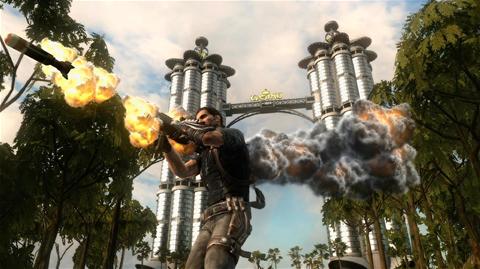
Remember the days when games were about gameplay, shooting enemies in a frenzy of violence, achieving that fatality after a hard battle in Mortal Kombat and dismembering hordes of zombies with a chainsaw. Avalanche Studios and Eidos the developers behind the original Just Cause have recognised this long hallowed tradition and came to the table with Just Cause 2. It’s a brutal departure from the mundane experience of the first game with high-octane stunts and gravity defying physics. From the outset, it is made clear the game isn’t focused on plot. Rather, gameplay is king and Just Cause 2 marries Chuck Norris fighting technique with the execution of a James Bond film. Shooting itself up with a few injections of adrenaline like jumping face first out of a plane at high altitude. Just Cause 2 is both a pleasure and an irritation.


The game’s storyline resembles a B-grade action movie and appears at first glance to be the oh-so predictable espionage tale of intrigue and big explosions. Just Cause 2 is set in the expansive South-East Asian island of Panau which is run in a similar vein to Cold War era Cuba, mixed with a bit of North Korean flair. You play as Rico Rodriquez an agent working for the shadowy US organisation “the Agency” and your mission is to eliminate the fascist regime of Baby Panay. The game follows the typical route of many of its sandbox predecessors, where players have a huge world map to explore (in the case of Just Cause 2 it’s epicly huge) and complete various missions. These missions are plentiful and the game itself works on the basis that the player needs to create chaos in order to increase the mission roster. With the insane arsenal of upgradeable weapons for purchase, not to mention vehicles, achieving chaotic bliss is no difficult chore and once you amass enough chaos various missions become available. Missions are divided between faction missions and agency missions, but first you have to choose one of the many factions.

Three main factions exist: the Roaches led by a corrupt businessman, the Reapers (definitely Che Guevara fans) and finally the Ular Boys led by a religious revolutionary reminiscent of the ever popular Osama Bin Laden. Faction missions follow the very simple formula of destroy, destroy, blow up stuff, destroy, save a hostage, destroy and destroy some more. The same can be said of the agency missions, which becomes repetitive as the game progresses. For the most part this is quite entertaining but can drag on after an intensely long gaming session. The reality is that Just Cause 2 is a game best played when either boredom sets in or time is not a factor. This doesn’t mean Just Cause 2 is a bad experience. Actually, it’s quite enjoyable and excessively fun until you have to travel from one side of the world map to the other searching for a mission trigger. In the game fighting increases the alertness of enemies (similar to wanted levels in GTA) and the more chaos you cause the higher the alert level. So be wary because if you’re alert level reaches critical you’ll be bombarded with missiles from every corner and the Panauan army will surface. But, if you have the skills you may survive, and fighting is at the heart of Just Cause 2’s game mechanic. The game is about duking it out with enemies and this is where the absurd charm of Just Cause 2 begins to shine.


Gameplay for the most part centers around a system relying on Rico’s dual grappling hook and his never-ending supply of parachutes. Pair this with a barrage of upgradeable weaponry and vehicles obtainable by gathering ‘parts’ and you become a lethal combination that leaves enemies incapacitated. The player can find a million ways to kill enemies, employing only the dynamics of the grappling hook and surrounding environment. In my own dabbling in-game I found attaching enemies to burstable gasoline cylinders quite enjoyable, with the enemy shooting straight up into the atmosphere hurtling. The absurdity of the gameplay is taken to new heights in some of the missions. One mission involves the player having to destroy a rocket midair whilst flying a jet at break speed where death greets you at the slightest error. Just Cause 2 is really over-the-top and is enjoyable in short bursts and in the end the gameplay means the player can be as creative as they want. But, one of the main problems with the game is the mission roster which is infinite and in my opinion wasteful of playing time. Where the game could be more dynamic by varying mission types, it ends up repeating the same missions with different scenery. This again is why I suggest you don’t solely dedicate gaming time to Just Cause 2, because I see it more as a ‘filler’ between other games.


The extensive world map is relentless and completing the game fully is a quest in itself. There are quite a few villages and cities scattered across the terrain begging to be freed and players can let loose enjoying the pure mayhem, still after prolonged play this too becomes tiring. Ultimately Just Cause 2 is a game you’d play for the sake of gameplay and is really exciting while it lasts, but dries out soon enough. Some would argue that the storyline is where the game falters but I thoroughly enjoyed the camp-ness of it all ( the terrible voice acting included). It really brought out the cheesiness of those old spy films the game is mirroring. Most would overlook this title because of dated graphics, which I might add are not really an issue on the PC, whereas on the XBOX 360 version the quality of the graphics is supposedly abysmal.

Yet, what is concerning is that gamers nowadays are coaxed into games with high polygon counts and the gameplay mechanics of a chimpanzee with a joystick (Dark Void anyone). Whereas, Just Cause 2 is a game dedicated to gameplay and shouldn’t be overlooked because of dated graphics. It sets out to be a fun explosive thrill and achieves that, but lacks storytelling depth and variety in missons which would otherwise make it an utter hit with the majority of gamers. Just Cause 2 is a hit and miss, with wasted potential. RAMjew


Thursday, May 13, 2010

Iron Man's number two


Just this week I was asked by a friend the most deep and intellectual question, ever possible. It was so amazing and shocking that I remained in a state of silence for a few seconds, before swiftly in my mind visualising possibilities. The question, simply put by the oh so clever individual, was, "Hey, how do you think Iron Man takes a dump flying around in his suit?". The question was so groundbreaking I considered my options, and the possibilities of how Iron Man could take a 'number two' materialised in front of my very eyes.


Some of the choices were so incredible I just had to share them with you.

Here they are in no particular order:

  1. Iron Man shares the same excrement disposal system that airplanes use where planes ascend to high altitudes and said excrement becomes frozen, and is released into the ocean below.
  2. Iron Man has a unique fossil fuel generator integrated into his suit so when he decides to let the ‘spaceship’ loose, it is converted into a viable fossil fuel (in comparison to something like coal).
  3. Iron Man has a missile guidance system situated near his rear that shoots out special skudmark missiles made of a combination of faecal matter and high explosives.
  4. Finally, Iron Man simply has a release latch so that whenever he feels nature calling, he simply opens the hatch and lets loose like a pigeon midair.


These are all possibilities, and some could be the truth. Or, maybe Iron Man has a strong case of constipation and is in need of some laxatives. Better call an ambulance for the man of iron because nature is a bitch, even to superheroes like Iron Man. RAMjew


Friday, March 19, 2010

Borderlands: where ownage is the aim


A dust storm settles as you prepare to take flight into the life threatening world of Pandora. It is you, your gun against a mass of enemies who will make your life a living hell. Borderlands is not a game for the faint of heart, because around every turn are surprises (some funny and others outright awesome). These can be mutated dogs called Skags to bandits who are really a bunch of intergalactic hillbillies. On the planet of Pandora you either go with the flow or against it. Playing the game I experienced a gut wrenching over the top ride bursting at the core with enough excitement for any hardcore gamer. So get ready for a serving of pure unfiltered action, and a few tranquilisers for the shock of awesome that is about to enter your system.

Borderlands was engineered by Gearbox software who are so epic that their first try at a original game is pure win. The game harnesses mystical powers combining first person shooter style, with the grace and depth of an RPG (roleplaying game). This means you can haul ass with huge weapons, and gather loot like theres no tomorrow. You have the choice of picking four different characters: Brick the berserker with strong melee abilities, Lilith with a phasewalk ability meaning she can teleport. There is Mordecai a bounty hunter specializing in sniper rifles and pistols, with his pet Bloodwing (who kicks major ass). A final choice is the mercenary Roland who is great for close combat and is able to deploy a turret that mows down enemies like a lawnmower in a field of zombies.


The story of Borderlands begins with the discovery of the Vault on Pandora, which opens up every 200 years. This is where your character kicks butt and depending on who you choose, the game plays out differently. But, the essential goal is finding the Vault and opening it with vault keys scattered across Pandora. It is rumoured to have alien technology and vast amounts of loot enticing many from across the galaxy to take their chances, and become Vault Hunters. The story is simple and is not over complicated. But the experience for me was full to the max with ownage. Borderlands is a joyride in a nuclear-powered scooter with no brake and a steep hill ahead. With that being said the game mechanics involves first person shooter action alla Unreal Tournament, meaning violent and oh so sweet headshots. It is then mixed with a dash of Diabol-esque item hording, leaving you with a smile of glee as your pillage whats left of your enemies.


The graphics are in no way jaw-dropping but are stylized and cell shaded, giving off a cartoon feel so fresh in a market where games aim for realism. This goes well with the bloody violence and roster of missions including: bounties, scavenger hunts, car races which bring the game up a few notches on the belt of godly gaming. The music was nothing to write home about (even from a galactic outpost on the far edges of the galaxy). But, in all honesty Borderlands is a real gem from Gearbox and has miniscule faults. It’s available on: XBOX 360, PC and PlayStation 3. Now, get those arms flexed and ready to enter Borderlands where the badass are really badass.


The game gets 85% and an approval of awesomeness from me. RAMjew

Thursday, March 4, 2010

Anime, the choice drug


I’ve been an anime connoisseur for nine years roughly, and have seen the ups and downs of the industry. The quality of anime titles ranges yearly and some anime peak, reaching untold heights of popularity. But, anime fans become addicted, and end up in a never ending cycle. Except, this cycle involves fantasizing about 2D anime characters.


In 2006 the otherwordly Melancholy of Haruhi Suzumiya was broadcast. The series was stylized by jaw-dropping animation, a mysterious plot and a hysterical titular character. Haruhi generated huge fandom both in Japan, and on a global scale. Extreme Haruhi fandom led to the establishment of Haruhism. Haruhists (as they like to be known) are a cult following the lore of Queen Haruhi, believing in espers, time travelers and aliens. It is amazing that an anime detailing the life of a Japanese highschool girl with god-like powers can be influential in society.


Narutards are equally as disturbing and are infatuated with the innerworkings of fictional characters’ relationships. Paramount to this is the rise in Sasuke and Naruto fanfiction. The fanfiction offers interpretations of Naruto and Sasuke relationships, and sometimes other pairings. Some of the works depict sexual relations and unnecessary details. Any person can see that these retards have nothing better to do than dream about their favourite characters getting it on. Otherwise, they would all be watching One Piece (the number 1 show in Japan) brimming to the rim with epicness that outmatches the fantasies any Narutard can think of. In reality they would rather watch a 100 more fillers about Naruto’s flatulence and the perverted escapades of Jiraiya.


This leads me to the conclusion that anime is a drug. Once you inject yourself, you’ll be tripping over the variety of anime. Confounded you will try and muster up the courage to watch as much as you can. In truth you will end up failing miserably, and probably living in your cousin’s basement. Finally when you’re on your deathbed uttering your last words, a Narutard will be laughing like a retard enjoying his Naruto and chicken wings. Awaiting him will be 200 filler episodes, examining Kakashi’s earlobe and Sakura’s love hate relationship with Naruto. RAMjew

Friday, February 5, 2010

Horror has never been so lol!


Over many moons there arrives a horror movie which defies all logic, and overrides the laws of physics. It obtains in the process a state of epicness, and lolness like no other.
Halloween II might be that movie because Rob Zombie has hit gold. Rob Zombie rebooted the dying Halloween franchise in 2007 and garnered mild success. Forward to 2010 and the release of his sequel, which looks more like an extended version of one of his music videos.

Lauri Strode (Scout Taylor-Compton) has survived the murdering mayhem of her pyscho hulk brother Michael in the previous film (Tyler Mane). Once, again Michael kills people in a variety of gory, obscene ways. All in the hope of getting to his sister Lauri, now named Angel in the film. The film suffers from being a confused mess, with random symbolism and moments that defy common sense. Michael is able to flip cars over with his bare hands, and dismember bodies like a fiend on speed. The consistent use of a white horse throughout the film is quite jarring, enhancing the lol factor of the film. Michael seems to be the Hulk rather than a serial killer on steroids. Or, perhaps he is both.

One of the more promising points of the film is the score, and the intriguing direction Rob Zombie chose to take the franchise in. The score uses classic 80s synth music coupled with some classic rock bringing a bit of nostalgia to the movie. This reminds me of many other slasher films from the same time period as Halloween, and enhances the funny moments of the film (which are meant to be so horrific). Rob Zombie uses many weird transitions and has unexplained plotholes in his version of the franchise, but offers some weirdness and a plate of awesomeness instead. The movie is a must see for any horror fan looking for a good laugh. The promise of a low budget film in the hodpodge of over-complicated horror movies, is strangely welcoming. Weird is good, and Rob Zombie deserves a view. RAMjew

Thursday, February 4, 2010

Kaze No Stigma stinks!


If one anime could be filled to the rim with generic vomit, that would be
Kaze No Stigma. I watched the anime on the recommendation from a friend. But, oh was I sorely mistaken. I am quite the avid anime fan and appreciate a good action anime every now and again. I don't even mind the slight inkling of romance and comedy. Yet, Kaze No Stigma takes stereotype and fanservice way over the top. The anime was animated by Gonzo, who produce anime ranging from average to epic. This anime was average, bordering on stupid.

First off, there are two main characters Kazuma Yagami and Ayano Kannagi. Kazuma is the quintessential silent, but strong type. He has been exiled from the Kannagi family, because of his inability to use fire jutsu. Kazuma is very much the Sasuke of the series, with less emo-ness and a pole up his ass. He is constantly protecting his brother, who is the damzel in distress for most of the series. Ayano on the other hand is a strong willed redhead much like Shana from Shakugan No Shana. This shows no true effort on the part of Gonzo to establish her character more effectively.

The animation is mediocre as expected of such a fail series, and character development is limited going nowhere. Fans will be left with dissatisfaction and a coppery taste in their mouth, from biting their tongue at the epic fail of the anime. RAMjew

Born to be a rebel? Red Faction Needs you!


You know I have this theory that rebels must have a hard time. This thesis of sorts was confirmed whilst playing the awesome game Red Faction Guerilla. Where, oddly enough you are a rebel and the main objective is to blow stuff up. The player faces the evil actions of the Earth Defense Force (EDF) who plan to terraform Mars to hell and gone. You take on the role of Alec Mason, a mining engineer who seeks revenge for the death of his brother. Red Faction Guerilla is a third person shooter, sandbox game by developer, Volition. Volition well known for their previous Red Faction games mix up the gameplay and borrow heavily from other sandbox games. This in itself is not a bad thing as it takes the best elements of GTA, Prototype and even Assassin’s Creed. The player is faced with the daunting task of taking back control of Mars from the EDF. Mars itself is divided into different sectors in which the player has to lower the control of the EDF, by blowing stuff up and completing missions. Different EDF facilities are rated in order of importance, meaning if you take out a high importance target more control will be lost. Missions range from demolition, to transporting vehicles and even guerilla raids on the enemy.

The fun of the game is in completing these missions which raise the morale of the people in a sector. As the morale increases ordinary civilians begin to join the guerilla movement, and support you in your fight against the EDF. What, also makes the game unique is the freedom it allows you to achieve a mission objective. For example if you wanted to blow up a target you could set up mines, destroy it with large vehicles or even rocket launch it to hell. This ease of choice means there are endless possibilities. The storyline is intriguing with the continuous plotting of the EDF, the unknown goals of the marauders and the story of a man seeking revenge.

Red Faction Guerilla has excellent graphics, but has some lag issues which may depend on the specs of your rig. The game offers something different in the overcrowded sandbox genre, improving on some of it’s borrowed gameplay elements. Overall, the game will satisfy any gamer with a taste for destruction and mayhem.

84% A great game, let the destruction begin. RAMjew